A Bored Entrepreneur Is A Dangerous Entrepreneur
August 25, 2026
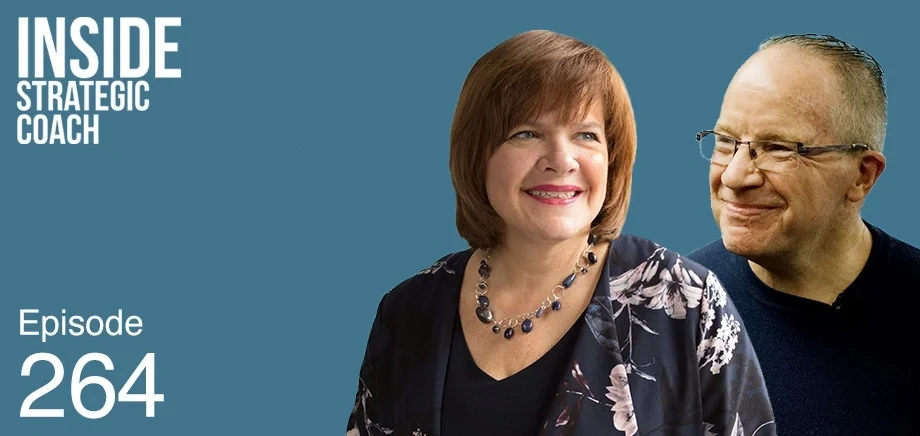
Hosted By
 Dan Sullivan
 Shannon Waller
For entrepreneurs, boredom is more than an inconvenience. It can lead to poor decisions, unnecessary disruption, and lost momentum. In this episode, Dan Sullivan and Shannon Waller explore why conscious thinking is the antidote to boredom and how asking better questions can create fresh energy, clarity, and opportunity from the experiences already in front of you.
Here’s some of what you’ll learn in this episode:
- Why entrepreneurs need to be aware of how they’re thinking.
- A simple, easy way to get energized by what you’re doing.
- Where boredom really comes from.
- How to respond to major changes in the world.
Show Notes:
Entrepreneurs need achievement that feels new, better, and different to stay energized and engaged.
If you are no longer growing, or are achieving in the same way for too long, boredom can quickly set in.
Boredom is not always a signal to look for more external stimulation; it can be a cue to change how you’re thinking.
You can shift your energy by consciously switching away from an unproductive thought and giving your brain a better question to answer.
Becoming aware of what you’re thinking, feeling, and experiencing in the moment is a practical antidote to boredom.
Asking yourself, “What is actually happening right now?” turns you from a passive participant into an active observer.
Taking the role of an observer creates emotional distance and helps you see a stressful situation more clearly.
Naming your experience gives your brain something specific to work on and creates an immediate shift in energy.
Anger and negative emotions can take over when you’re reacting unconsciously instead of examining what’s happening.
Curiosity keeps entrepreneurs engaged because it turns familiar experiences into sources of new insight.
Reviewing your best “yes” decisions and best “no” decisions can reveal valuable patterns, connections, and confidence for the future.
The more conscious you are of your thinking, the more easily you can create fresh energy from your past, present, and future experiences.
Resources:
The Greater Game by Dan Sullivan and John Bowen
Thinking About Your Thinking by Dan Sullivan
Inviting Genius: How Good Leaders Use Conflict to Become Great by Matthew Abrams
The 3 Most Important Questions For Constant Growth As An Entrepreneur
Episode Transcript
Shannon Waller: Hi, Shannon Waller here, and welcome to Inside Strategic Coach with Dan Sullivan. Dan, in your most recent big book, The Greater Game, which you've co-authored with John Bowen, there's an expression in that book, or in a topic of the book, that says, boredom kills, which is a very powerful, and I believe to be true, statement, but I'm super curious as to what you mean by that, and why that's such an important topic for entrepreneurs.
Dan Sullivan: Yeah, I think first of all that entrepreneurs are different. They're looking for a form of entertainment in their life, which is also connected with achievement. I think everybody experiences boredom, but the entrepreneurs have made a decision that if they're not achieving, they find that boring. And that's very, very different. And if they keep achieving in the same way, they find that boring. So what I'm finding with entrepreneurs is they like switching channels really fast. But it's related to whether they're being energized or not. Yeah, I think it's an energetic experience. They like new, they like better, and they like different. So one of the things is that the world isn't going to do this for you. So it has to be a thinking capability that you have for yourself, where you are in touch with how you're thinking about things. And if the way you're thinking about things right now doesn't give you energy, the skill is actually being able to switch off the thing you're thinking about and think about something else.
Shannon Waller: That's very thought-provoking, Dan, that it's about your thinking and how conscious or aware you are of your thinking. In other words, you can bore yourself, right? And we talk about it in Strategic Coach all the time, thinking about your thinking. That's really what the Program is about. But that you have to be aware of it. I've experienced this with our clients, is that they get bored with themselves, their businesses, their clients, their products, their services, all the things. And when they have a new way of thinking about it, they get that energy back. That sounds like what you're tapping into.
Dan Sullivan: Yeah, you know, in Strategic Coach, we say that there's four different kinds of thinking. The most basic level, and I think we all do this, is thinking about things. So we all have our things in our life. We just had the experience, and you were part of it, but we were at our cottage, a new cottage that we built over the last year and a half, really—two or three hours north of Toronto, beautiful setting. All we were doing was getting used to a new place. We have an existing cottage, which is now going to become a guest house. And that was part of the trip, was to decide which was which. Was the original cottage going to be our home, or was the new cottage going to be our home? And about a day for me in the new cottage, I says, no, no, this is new, this is fresh.
But what I realized was that what was going to get me used to the new cottage is if I had a real conscious experience of the new cottage. So I'd walk into one room, and I'd look at the whole room, and I'd say to myself, now be conscious of what you're doing when you walk into the new room. And that was energizing. Then I would do it with another room. It's got a lot of wide, open spaces, but it does have separate areas. And then there's a very nice setting outside and I went for a walk outside and I said, now just experience walking down the stairway, down to the water, down to the dock. And what I was noticing is that every time I switched channels and I said, now be conscious of this, I got energized by it. So my sense is that you're only bored when you're not conscious of what you're doing with your brain.
Shannon Waller: You're only bored when you're not conscious of what you're doing with your brain.
Dan Sullivan: Yeah. If you tell your brain, okay, now, what's actually happening right now? It's a series of asking yourself questions. You know, what am I thinking about right now? And your mind immediately switches, and it says, oh, I'm thinking about this now. The moment I do that, there's an energy change. You can be in a sort of stressful situation. Usually stressful situations are with other people. You're with other people who are stressful. You know, the way they're behaving, the way they're talking, or the subject that's being talked about is stressful. But the moment you say, what's happening to you right now, and why do you think that this is a stressful situation? The moment you ask yourself the question, you get energized because you're giving your brain a task. You're giving your brain an experience to think about. You say, oh, I'm in this meeting and this is happening. And what I usually say is peculiar to me, but I say to myself, if I were invisible and nobody else in the room could see, what can I be learning here? Because I'm invisible, nothing's really required, nobody's paying any attention to me, they're paying attention to what's going on. So I think it's the ability just to switch channels in your brain in a conscious way that breaks you out of boredom.
Shannon Waller: It's interesting, Dan, there's a couple thoughts that come to mind. One is, and especially the invisible question, is you're putting yourself in the role of the observer, right? Which is a very powerful way to get perspective, emotional distance from a situation, which means we can see it more clearly. And when you asked your questions, like, what am I experiencing right now? And I learned this from a great interview with Matthew Abrams, author of a great book on conflict resolution called Inviting Genius. I've heard this before, but he just really beautifully puts it in his book. But when you put words to how you're feeling, it literally switches the part of your brain that you're using, right? So you can be reacting to something from our fight, flight, or freeze amygdala, keeps us alive. But when you put it here, which is our slow, thinking brain, then you can name it and you can get, again, that emotional distance from something. So it's a very sophisticated process that you're talking about in terms of thinking about your thinking and thinking about your experience. But I think it's pretty profound to say that then you're not bored, right? Like that's really interesting. So boredom kills. That's a strong statement. Why is boredom so deadly for entrepreneurs? I'm curious.
Dan Sullivan: Well, I can only speak for myself because I'm the only entrepreneur I have direct access to. I would say that I want to eat something. In other words, there's a number of ways that I can attempt to solve this. I don't watch television, but I do watch YouTube. So I said, well, I'm going to go and look for something interesting on YouTube. But I find that doesn't really satisfy me because I'm not actually being conscious about how I'm feeling right now. I think the big thing is, asking yourself questions makes you conscious. It's almost like a meta, there's a thing called meta-cognition. It's almost when you're conscious of how you're actually experiencing something, you're not experiencing any emotion with it, or if you are experiencing an emotion, how could I feel better in this situation? That's the question, you know. And immediately your brain will come up with an answer and the energy will come.
But I was thinking about what you were talking about with Matthew and what he was doing. If someone is really angry and you don't buy into it, you can be sure they're not conscious. Someone who's angry is not conscious. They're surfing on a negative emotion. So it's really interesting, and I've been thinking a lot about this lately, because I think we're now two big experiences. We had COVID for three years and now we've had AI for three years. And I said, it's really interesting that the whole world to a certain extent has just had two historically major experiences within the last six years. We've just had two major kind of planetary experiences. It's almost like historical. And my sense is that there's been a real division in people between those who've handled those two situations well and those who have not handled it at all well.
So much turmoil is being reported on in the media. And it's almost like we're being confronted with something and you have to decide how you're going to live your life out of these two. And we went through the COVID experience because you and I especially had to respond to it in a very creative fashion very, very quickly. That was, we had to switch the very nature of what Strategic Coach was doing, which was live, in-person workshop situation, and we had to switch it to Zoom, where you're looking at a screen and you're trying to make sure that the experience that people were getting when it was live and in-person and interactive, we had to bring that experience over to Zoom. And that was a major transformation for us.
And the second one was how you think about the emergence of AI, including your own use of AI, but just how other people are talking about AI. And one of the things I was thinking about over the last couple of days was, this is it. From now on, we're living in the AI world. We're just at the early stages of it. I mean, it's not going to get less. And I said, it's very, very important that you be in touch with your thinking. Both the three years of COVID and then the three years now since AI started.
Shannon Waller: So what I'm also hearing you say that just reacting without thinking about your responses or giving language to it or essentially being creative with your response is kind of dangerous. So you see people not responding, not keeping pace, feeling like they're falling behind. Whether that's true or not, that's not for us to say. Whether or not it kills their business or whatever, it could easily, quite easily actually. But it's dangerous to not pay attention to your thinking is what I'm hearing you say.
Dan Sullivan: Yeah, and I think one of the things you have to be conscious of is that in one way or another, everybody's been deeply affected by two experiences. So you're not dealing with the person who was there in 2019. March of 2020 was the beginning of COVID and then November of 2023 was the beginning of AI. So one thing you have to be conscious of is that you're dealing with, in your relationships with other people, whether they realize it or not, they've been deeply affected by these two experiences. Because everybody's talking about it. I mean, one thing is that it's being talked about in a very general way. It's like the big news and people are talking about this. I still get a couple of newspapers. I get a local Toronto newspaper and I get The Wall Street Journal because I like the feel of paper. I like the experience of, you know, the pages and everything. But I would say just going through the paper this morning, The Wall Street Journal, there were 15 articles on AI.
Shannon Waller: Wow.
Dan Sullivan: Easily there were 15 articles, whether it was the stock market or whether it was threats to privacy, whether it was new AI applications and everything like that. So this is kind of a big deal. If you're aware that these big changes have happened and that one way or another people have been very affected by these changes, it means that your way of dealing with people before 2020 may need to be updated.
Shannon Waller: What do you think some of those changes need to be, Dan? Do you have to find out what they're thinking, whether or not they've been thinking what they're thinking? Are they injured in some way? What do you look for?
Dan Sullivan: Well, I think the three things is our D.O.S. concept in Coach: Dangers, Opportunities, and Strengths. So first of all, it gives you a new topic of discussion. Is there any way that the way you're thinking about AI? We'll talk about AI because we're not being restricted by COVID anymore. But the way that you're thinking about AI, is it energizing or de-energizing? In other words, when you hear people talking about this, what's your own personal response?
Shannon Waller: Right. I like that. Well, and it goes back to what you were talking about at the beginning, which is, you know, your way of adapting to a new environment, your new cottage, is to be super conscious. And when you are super aware, that's energizing. And when you're not aware, aka bored, it's very de-energizing. Yeah, I like that.
Dan Sullivan: The other thought that I've had, and it really appeared last week when we were at the cottage, is that I feel I'm very fortunate. I'm very fortunate because I like being with myself. I have a sense that not everybody does.
Shannon Waller: I know that's true. Was that always true, Dan?
Dan Sullivan: Yeah, I think there's good fortune for that. I've always been comfortable that I am who I am. And I'm very, very comfortable with the kinds of experiences I have. I'm very intrigued with how my mind works. You know, I'm very intrigued with what kind of ideas come into my consciousness. It's kind of neat because I put in 82 years and, you know, I'm sure in a certain way my experience of being 82 is similar to my experience of being 10 years old. There's a real consistency. I definitely feel that I experienced myself today very much the way I experienced myself 70 years ago with a lot more experience.
Shannon Waller: Yeah. One of the things that always makes me smile when I remember that you've said it is, every day I wake up and I see what my brain's going to do. There's something so very charming about that. And again, it's that very powerful role of observer. People work their entire lives to get that. But you're kind of just curious and you're open and you're positive, not super judgy, you know, and you keep finding the right ways to steer your brain in the way that you want it to go, in the way that's most fun and productive and in teamwork with other people. There's a graciousness that you give yourself, which is cool. And then you also extend that to other people, which I benefit from. It's a cool approach. I've never heard anyone else talk about it like that.
And Dan, what's interesting is, circling back to our topic, it's childlike versus childish, but there's a curiosity about that. And curiosity is an antidote, probably not the only one, to boredom, right? When you're interested, when you're curious and you're paying attention to the present moment and you're like, oh, what am I thinking right now? What am I feeling right now? If I wasn't here, well, could I learn from this? That's being curious, which is the opposite of being bored. And I think curious, interested people make much better, more intelligent decisions than people who are bored. You've talked about this in a different context where the need for novelty. People who are really good firefighters, if there's no fires around, they become arsonists. This is not good. They blow up stuff in their companies, they blow up stuff in their relationships. So I've always said this, and I probably stole it from you. A bored entrepreneur is a very dangerous creature.
Dan Sullivan: Yeah. Mainly to themselves. Yeah. But it's an interesting thing that my life experience seems to be fairly consistent. I can put myself back, let's say, in a situation 50 or 60 years ago, and the person I sense having that experience 50 or 60 years ago is the same person I am right now. There isn't a difference of nature is the same person.
Shannon Waller: I don't know how that could not be true of most people, although people do have some transformations, but the fact that you like that person is kind of a big deal. You're essentially happy in your own skin. I love that, Dan.
Dan Sullivan: Yeah, so what have you gotten out of the conversation? What are some new thoughts that have come?
Shannon Waller: It's interesting because it ties into some other things we like to talk about, like our newest book that we're working on. I think the thing that I had not put together quite as directly is to eliminate boredom, become a lot more conscious in the moment. Bored, I would look for stimulus, I would look for stimulation, I would go try and entertain myself on YouTube or what have you, same thing. But actually just to become more aware in the moment is something I had not—I know when I am aware I'm not bored, I will say that—but I hadn't thought of it as a strategy. Let me put it that way. I had not thought of paying attention to the moment, looking around. It's interesting because it's a cognitive behavioral therapy strategy when people are anxious, what are five things you can see, four things you can hear, three things you can touch, that sort of thing. So you just get into your senses. It's a very impactful strategy for becoming more present super fast. But I had never thought about it as an antidote to boredom. That's so cool. And that's a much bigger danger for me than anxiety, for example. So that's one of the things I've gotten out of it.
Dan Sullivan: The thing that I got out of it is that more and more the tools that we're creating for Strategic Coach require that people remember past events, past achievements, past failures, and I think that my growing self-awareness is enabling me to set up thinking processes for the other entrepreneurs where they're more aware of things that they've done in the past. My sense is that if they become aware of them, they make connections that they haven't made before. Like I introduced a new tool yesterday. And it's called Saying Yes, Saying No. What I have them do is brainstorm all the times in their entrepreneurial life where they've said yes and there was a huge payoff because they said yes. They do that for a couple of minutes, and then they do times in their life where they said no, and they got a huge reward for saying no. So they'd have two totally different saying yes to something and saying no to it.
And then they start taking the top three things they've said yes to and the top three things they've said no to. But I was in a breakout group with three of them, and then I was interacting with about 25 on Zoom, and when I began realizing that, in the course of about 30 or 40 minutes, that people had made vast number of connections of experiences that suddenly they became aware of, and that those connections were creating entirely new thoughts for them, that gave them a lot of confidence, a lot of clarity. They were simplifying things and everything like that. So my sense is that the more I do it for myself, the more I'm able to set up the circumstances that other people can do it.
Shannon Waller: And that's the fascinating thing about you, Dan; your tools and the experience in the Program is people, until they are asked questions, your questions—for example, there's lots of questions we can ask about our past and our experiences, but somehow your questions, your best three yes experiences, your best three no experiences, for example, is you can take an experience that before that had nothing new in it. It was unexamined. And all of a sudden it's like, oh, I said yes to this opportunity. I said no to this relationship. I said yes to this teammate. I said no to this product, whatever. And all of a sudden, oh, that throws a whole new context on the experience, and out of that come these connections and this incredible burst of energy, which is kind of fun. So you can take something that you might've thought was boring, and all of a sudden there's new life in it because of the context of your questions. This is such a great way to talk about the thinking that people do about their own thinking and Strategic Coach. I feel like this is a little mini masterclass about that. So that's awesome. Dan, as always, thought provoking and interesting and going lots of different places. So thank you.
Dan Sullivan: And not boring.
Shannon Waller: And not boring. Way worse than death.
Dan Sullivan: Just to make sure that we're ending with what we started with.
Shannon Waller: Exactly. Exactly. Wonderful, Dan. Thank you so much.
Dan Sullivan: Good.
Related Content



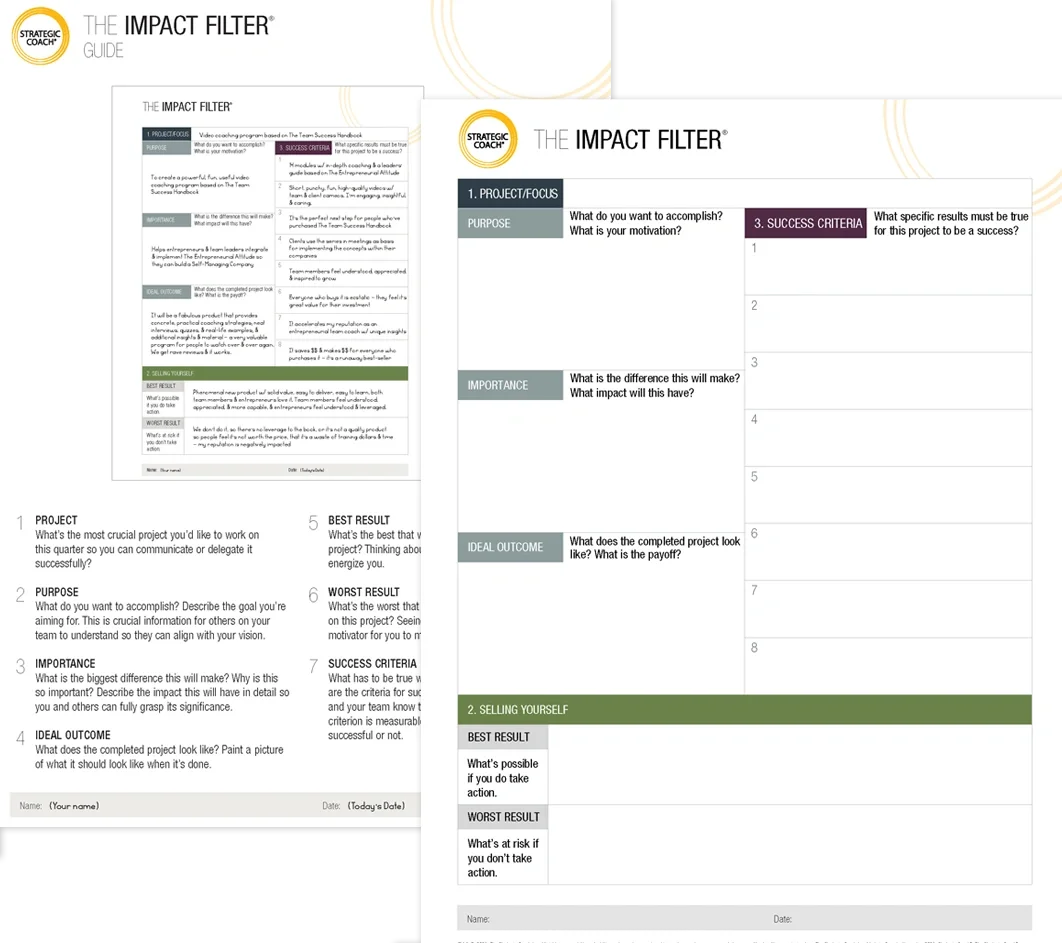
The Impact Filter®
Dan Sullivan’s #1 Thinking Tool
Are you tired of feeling overwhelmed by your goals? The Impact Filter is a powerful planning tool that can help you find clarity and focus. It’s a thinking process that filters out everything except the impact you want to have, and it’s the same tool that Dan Sullivan uses in every meeting.